
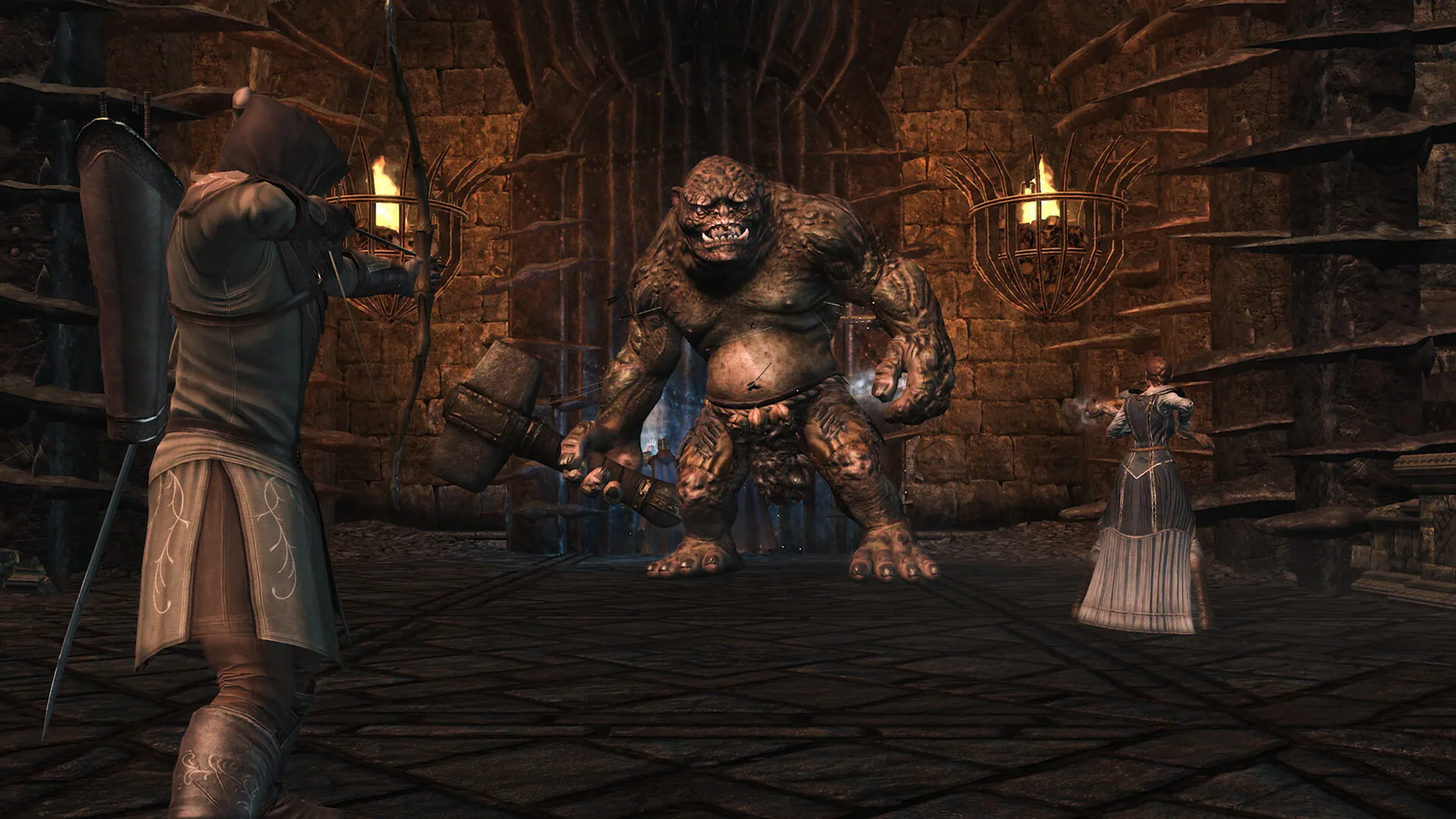
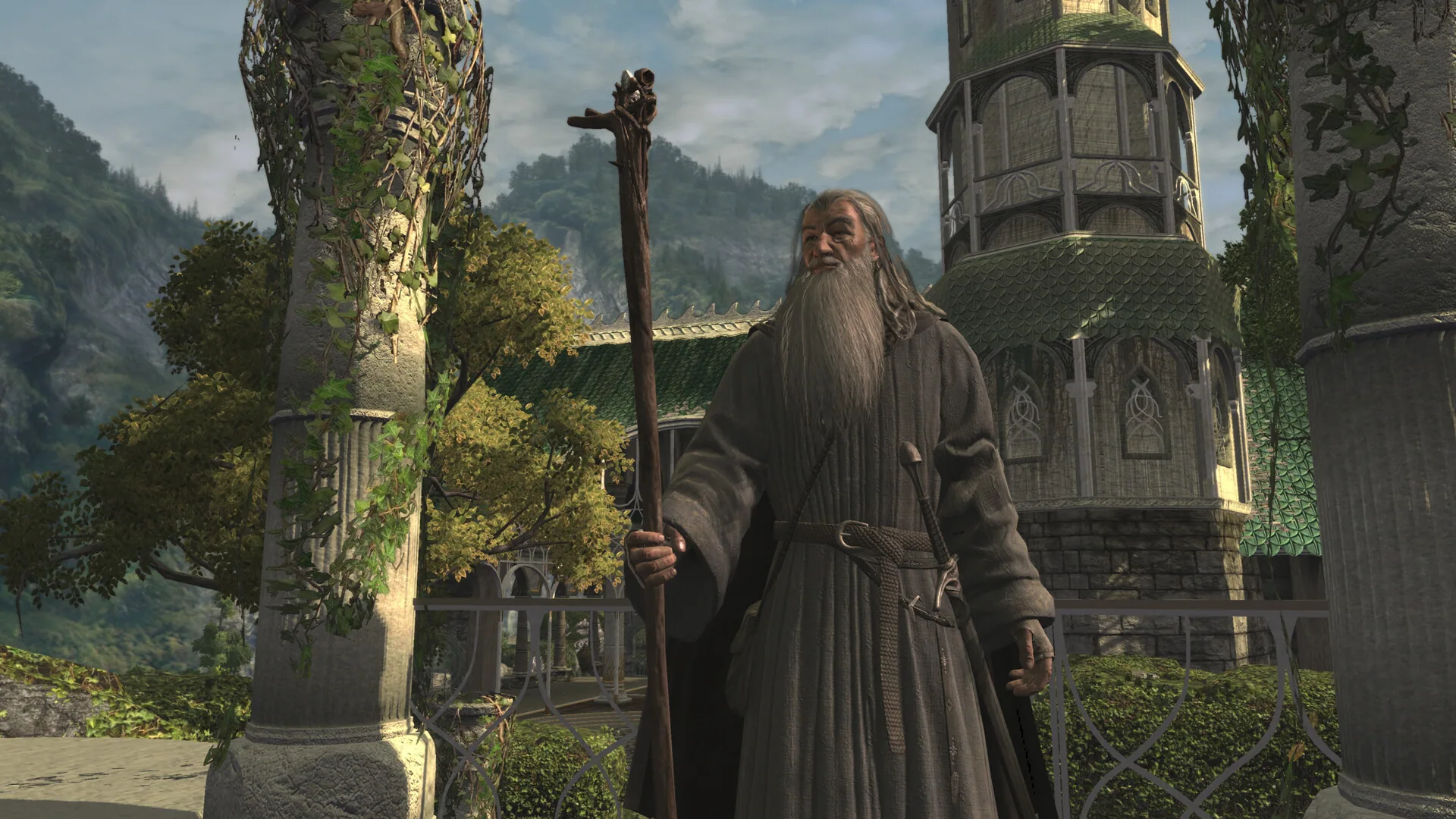
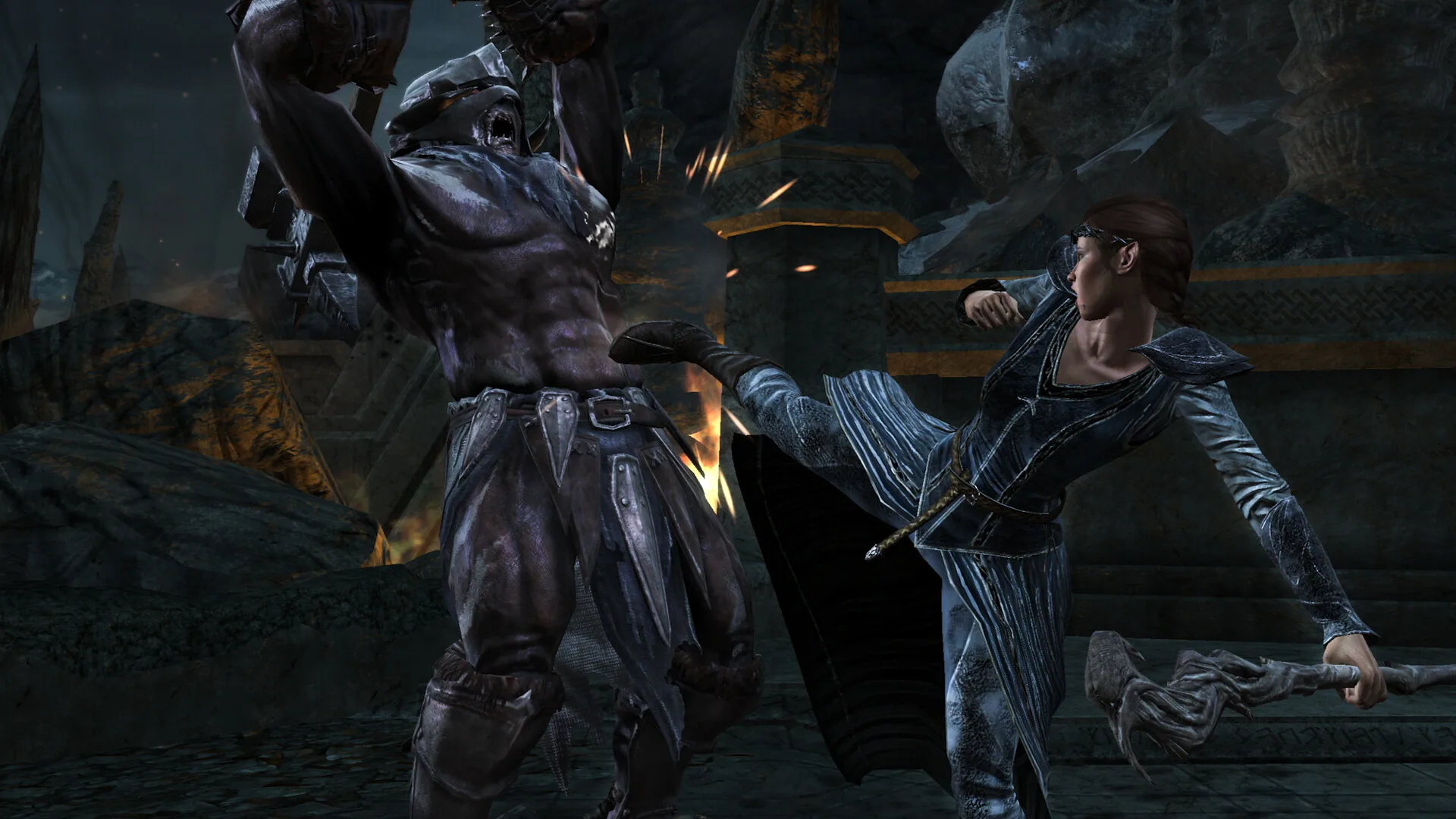
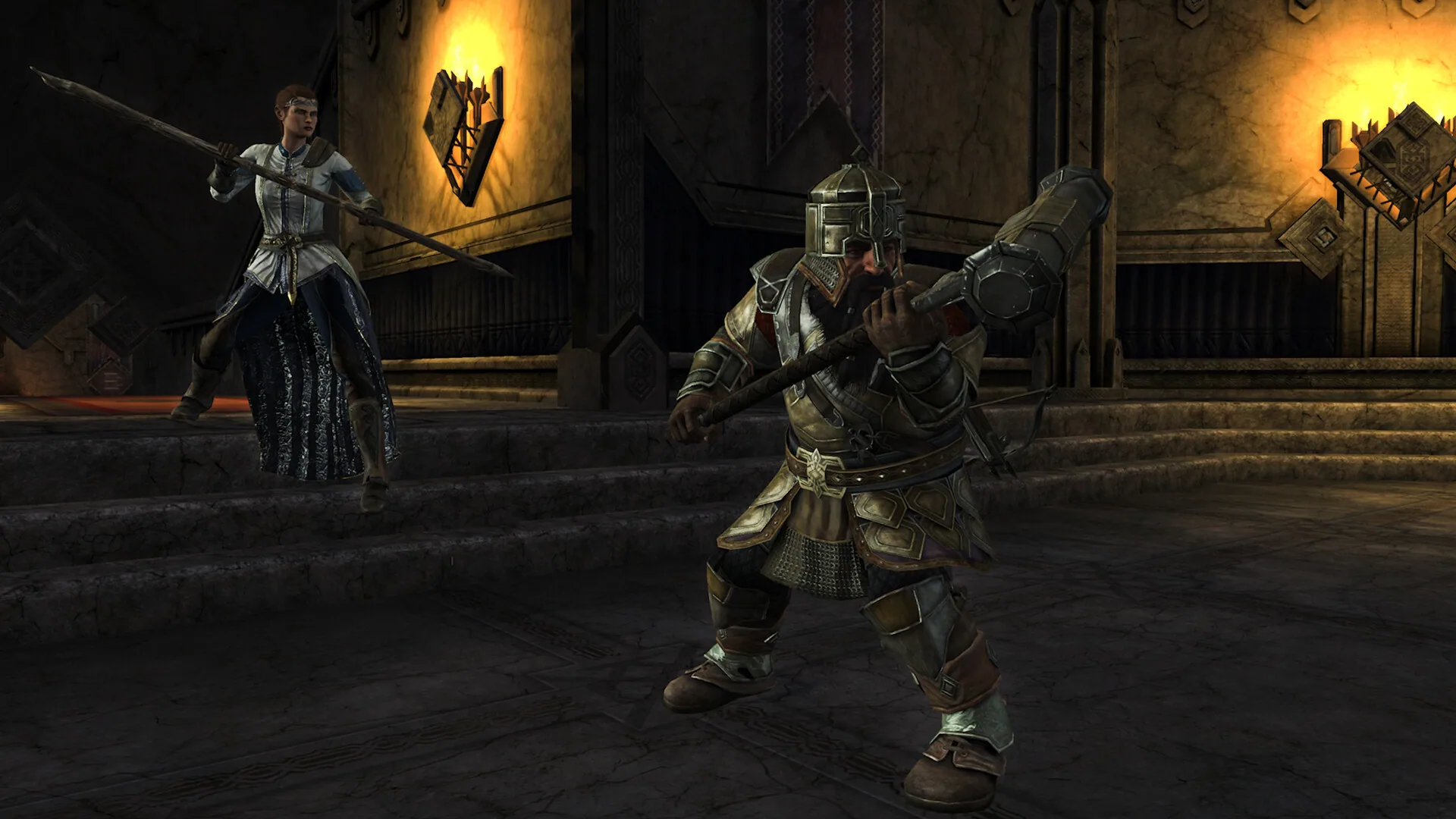
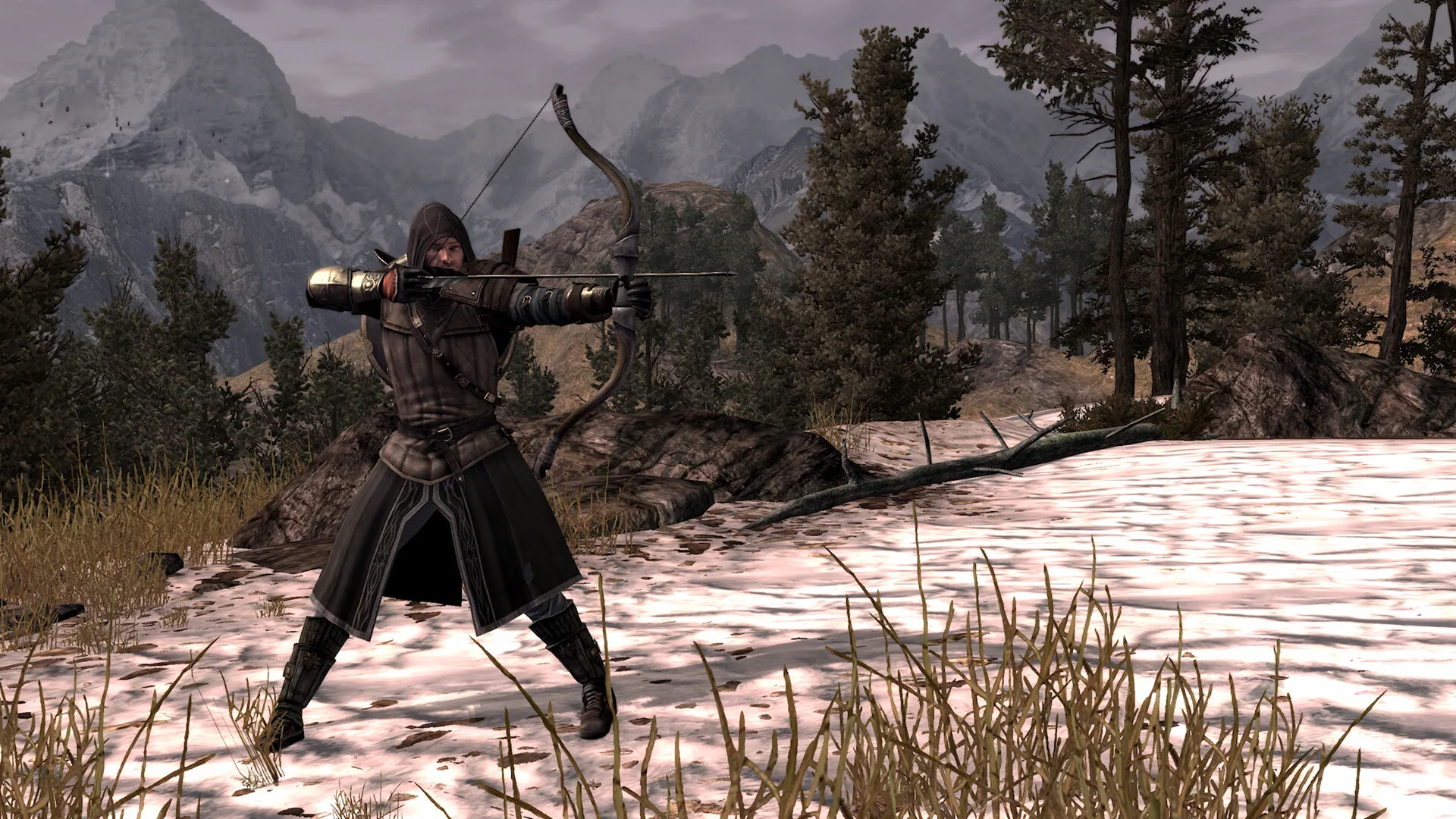
Five current stills, one accessible gallery
The gallery is a small sequence of current Steam screenshots rather than a wall of repeated thumbnails. Each still has a manifest identity, an exact published URL, a descriptive alt value and a caption that explains its role in the route. The controls expose Previous and Next actions, an indexed count and direct slide buttons. On mobile, one image remains in the natural reading flow and the caption stays attached to it; the player does not need to interpret a grid of tiny crops.
The image order is intentional. It gives the visual route a beginning, middle and return path while preserving the five source records as distinct media. A gallery visitor can move through the current store’s visual material without confusing a video thumbnail with a Steam still. The source labels make that distinction explicit, and the captions keep the images connected to the campaign, fellowship, combat, foe and location routes.
Because the stills are current-edition media, they are not used to make a historical 2011 claim. The original manual and official videos remain separate source records. This lets a player browse the present visual shell while reading older vocabulary on the combat page or historical edition on the timeline. The page’s value is the separation: current image, official video and historical document each retain their own provenance.
Two official video touchpoints
The Touchpoints record is an official Warner Bros. Games ANZ upload dated 6 July 2011. Its captured description names the northern journey through Bree, Rivendell, the Misty Mountains, Mirkwood, Gundabad and Carn Dûm. The Fellowship record is an official upload dated 18 July 2011; its capture describes the three heroes, the northern story and Agandaur. Those dates and descriptions are the reason the videos appear as source-bound chapters rather than as generic “watch now” decoration.
Both videos use a click-to-load facade. The initial HTML has a real keyboard-accessible button, a captured thumbnail and a visible source link. Only after activation does the page create the youtube-nocookie iframe. This treatment matters on a phone and on a metered connection: the player gets the media choice in the first viewport, but the browser does not request a player until the player asks for it.
The gallery does not add timestamps that are not in the bound record. Instead, each video has a title, official source URL and a short source description. If YouTube changes a thumbnail or a video page, the source link remains the direct route to the official upload. The visual component is therefore useful without pretending to be a transcript or a chapter index.
How to pair media with the wiki records
Use the stills when you need a visual memory aid, then use the structured page for the exact lookup. A screenshot can remind a player of a fellowship scene or a northern location, but the Fellowship page is where the three hero records and local checklist live. The Warfronts table is where the seven named fronts are listed. The Foes and Bosses page is where the eight enemy names are kept together. The image supports those transitions; it does not replace them.
The official videos perform a similar handoff. Touchpoints is the route into the named northern geography, while Fellowship is the route into the three heroes and Agandaur. The Campaign page uses those source descriptions alongside the observed guide chapter records and keeps the chapter seven gap visible. The media page can therefore serve as a source hub without pretending that a trailer is a complete walkthrough.
For a return visit, use the stills carousel to find a visual cue, then search the top register for the name you need. The route search covers labels, hero names, foe names and achievements, so a media visit can end at Relentless, Fornost or a specific hero record. The controls are small, but each one has a real data destination behind it.