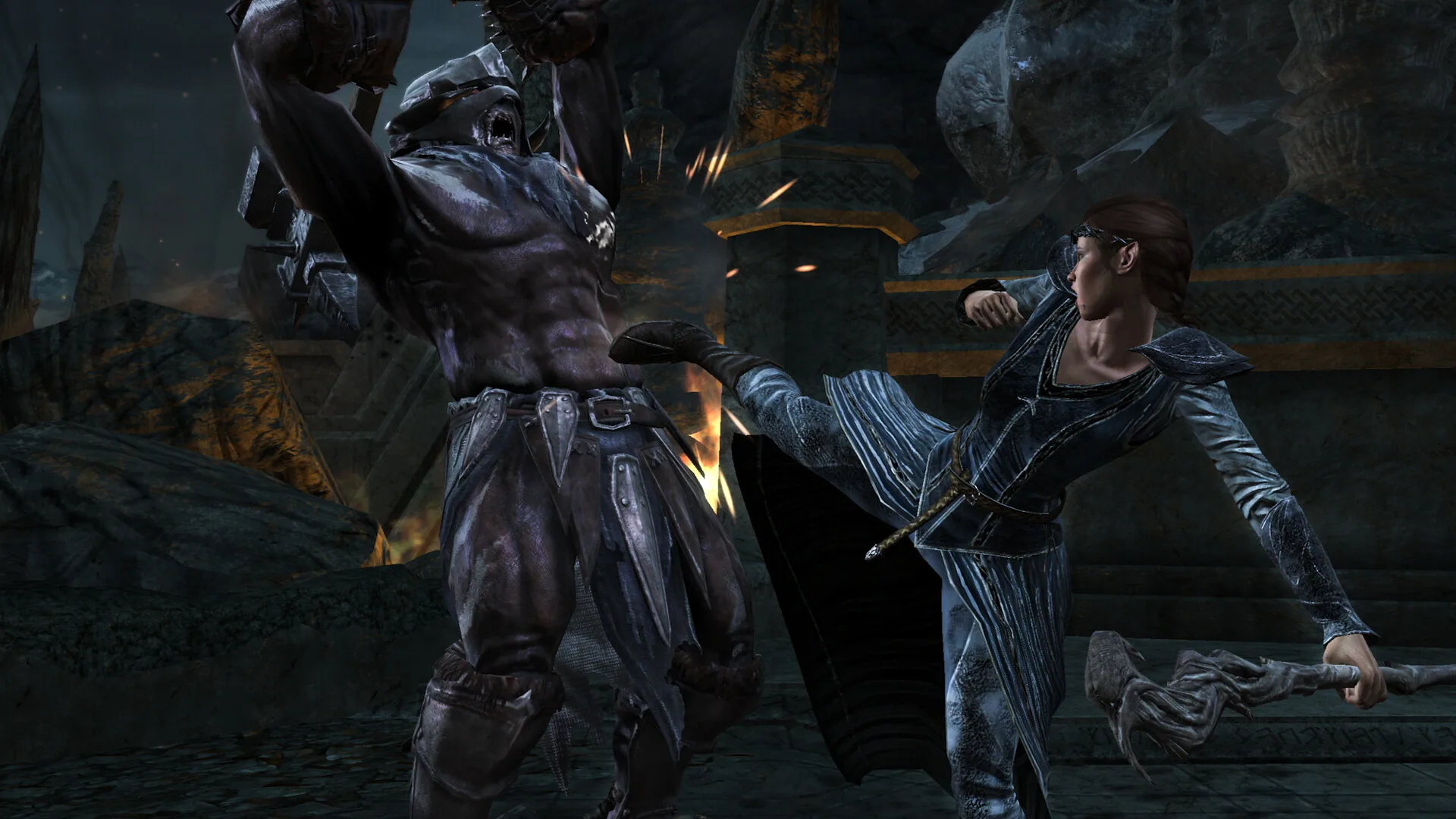
A combat loop that starts with recognition
Begin by recognising the situation rather than trying to memorise a perfect sequence. The game is recorded as an Action/RPG, so the useful first question is what the encounter is asking from the party: movement, pressure, survival, ranged attention or a chance to recover. The roster has three playable heroes, but the current bound data does not supply a complete numerical role chart. Read a hero’s Ranger, Elf or Dwarf label as an orientation point, then watch the encounter and use the named systems that the manual supports.
War Cry, Sanctuary and Evasion are the most useful terms to keep together because they describe different kinds of response. War Cry is an active named ability in the manual vocabulary; Sanctuary names a protection or recovery idea in the same source boundary; Evasion points toward avoiding incoming pressure. This guide does not assign unsupported durations, percentages or cooldown values. Instead, it recommends a simple rhythm: notice the threat, create room, use the relevant action and return attention to the party rather than chasing one target across the field.
The rhythm is especially useful when the group changes heroes or when an older walkthrough uses an unfamiliar phrase. If a guide says to save a named ability, ask which source and edition it is describing. If the phrase is in the original manual, treat it as the historical control vocabulary and then check the current edition route for product context. The distinction keeps a player from turning a remembered term into an exact balance promise.
Protect the fellowship before chasing damage
A party guide should give a player a decision order. First, keep track of where the three heroes are and whether a teammate has fallen. The achievement record includes Revive a fallen ally as an exact objective, which makes revival a concrete player action rather than a vague theme. Second, create a safe moment with the named defensive or recovery vocabulary. Third, return to the highest-pressure enemy or objective. This order is more dependable than treating every encounter as a damage race.
The records also contain objectives for headshots, critical hits, ranged damage and simultaneous kills. Those entries are useful as optional practice targets, not as a universal order for every fight. A player can notice a 10-second critical-hit objective while learning the encounter, then return to survival if the party is under pressure. The guide’s job is to connect the exact objective to a sensible moment, not to tell a player to force an achievement at the cost of a failed run.
Co-op play adds another layer. Strength of Our Alliance asks the player to slay one enemy with two other players. That wording confirms a three-player cooperative target, but it does not establish a complete party requirement for the rest of the game. Keep the objective beside the current roster and edition record, then let the group decide when to pursue it. The distinction between a target and a general rule keeps the table useful.
Loot decisions: inspect the record, then the drop
Loot is where a short source record can tempt a guide to overstate. The bound terms include elfstone, and the achievement ledger includes Gem-studded for slotting an elfstone and Well-arrayed for equipping a full armor set. Those are clear actions. They do not, by themselves, supply a complete rarity ladder or a value formula. Treat each drop as a decision: does it support the hero you are trying, does it move an achievement objective forward, and is the improvement worth changing your current setup?
Expert Treasure Hunter asks the player to locate five gilded treasure chests, while Dragon-hoard asks for 25,000 coins. Those objectives create two different loot habits. One rewards attention to exploration records; the other rewards accumulation over time. The guide keeps them separate so that a player does not mistake a chest count for a currency route. The achievement filter can isolate records with objectives when you want a short checklist rather than the complete 46-row ledger.
Use the version switcher when a loot term appears beside a historical guide. The original PC manual is a source for the older vocabulary, and the current store link is a source for the Legacy Edition identity. A route link can be followed in a new tab, but the on-page note should remain the anchor for your decision. That makes a screenshot, a copied URL and a later return session less likely to lose the context.
Difficulty and achievement practice
The achievement record names Heroic, Legendary and Normal in explicit objectives. Against All Odds requires completing the game on Legendary, Victorious in Battle requires completing the game on Normal, and Hero of Legend requires completing the game on Heroic. These records are strong enough to define a practice plan: choose the difficulty target first, then keep the exact wording nearby. The page does not infer which difficulty is best for a new player because the captured data does not include a difficulty recommendation.
A sensible practice loop is to learn one named system in a forgiving encounter, then revisit the same decision when an objective gives it a measurable shape. Relentless asks for a 50-hit streak while in Hero Mode. Living Shield asks for 25,000 absorbed in one level. Keen-eyed Marksman asks for 50 headshots. These are different kinds of attention: sustained play, protection and accuracy. Treating them as separate drills helps a group decide what to practise without turning every run into a checklist.
The current Steam-bound achievement list has 46 entries, and the Achievements page preserves the exact names and objectives. When you need a target, use that table as the authority for the wording on this register. When you need a mechanic explanation, return here and read the manual boundary. Keeping the data page and guide page separate is the clearest way to use both.
The original manual boundary
The original PC manual is valuable because it gives the named language that players and older guides use. It is not a current-edition product page. The manual link is tied to the original Steam app, while the current store link is tied to the Legacy Edition. The guide shows both source paths so that a player can check whether a phrase is being used as a historical control reference or as a current store claim.
This boundary also explains why the page avoids invented numbers. A manual phrase can tell a player what a named action is called without giving this project a basis for asserting a modern balance value. The same is true for hero roles and loot. The best player-facing answer is often a sequence—recognise, protect, act, inspect—paired with the exact source link, rather than a confident number that cannot be verified.
When you leave this page, the natural routes are Fellowship for hero identity, Warfronts for place orientation, Foes and Bosses for enemy names and Achievements for exact objectives. Combat is the connective tissue between those records. It teaches a player how to use the names in a session while leaving each structured fact in the page where its source and fields can be checked.